Thursday, October 28, 2010

verify verify verify!!!!

when i first saw the topic that we would be discussing last week in our class/blogging about for this week.....i got really excited. VERIFICATION AND JOURNALISM. verification...what a great word. i just love it. as group 6 so kindly outlined for us, verification is:

-the establishment of the truth of correctness of something by investigation or evidence.
-the evidence that proves something is true or correct.
-evidence or testimony that confirms something

verification is, basically, necessary in journalism for us to maintain credibility, independence, and fairness. verification does NOT necessarily mean fairness and objectiveness, but the subjects have to do with one another. i like to think of it as verifying we get our facts straight and correct....which has will determine whether we are fair and balanced, but the two certainly are not synonymous.

verification is SO important to me. i never really understood how important it was until i began this semester working for the KBYU daily news at noon program that all broadcast journalism majors have to work for. my comms 325 class, beginning reporting, is a class where we are assigned a beat, given an assignment to do a story each week, and the rest is up to us. we find our stories ourselves, shoot our stories ourselves, set up interviews ourselves, interview people ourselves, get footage ourselves, wrote our script ourselves, edit our stories ourselves, produce the stories ourselves....

you get the idea....

that was a long tangent and an indirect way of me saying we have A LOT to think about when we are doing a news story. a lot. my brain almost explodes into a million little pieces each and every week of my life. i'm not complaining, i just found this past week's subject matter interesting BECAUSE of the fact that this semester, as a somewhat real-life journalist, i have found out that verification is truly so important. i have to check my facts...then check my facts...then check that i actually checked all my facts correctly. i also have to check:
-quotes
-numbers
-addresses
-statistics i use
-all my footage to make sure i am not showing anything i am not supposed to be showing
-my attributions to people i talk about
-time references used
-web-sites
-spelling
-ages
-addresses
-official titles
-and MORE.

if i, or any other journalist, fails to properly do this, we we are putting ourselves at risk for much more than a stern-talking-to from our news directors. this is a great LINK to an article about the AP and their fact checking problem, it's really interesting, i enjoyed reading it:
http://bigpeace.com/fgaffney/2010/08/19/a-p-gets-its-facts-wrong/

here are some more interesting sites about fact checking:
http://www.journaliststoolbox.org/archive/2010/09/urban-legendsfact-checking.html


this is my favorite example: i remember my freshman year after the april conference BYU's daily universe came out with the conference report but accidentally wrote "the 12 apostates" instead of "the 12 apostles." whooops. here is the link about that:
http://newsnet.byu.edu/story.cfm/72090


i learned in one of my broadcast classes that the quickest way to get someone mad at you is to spell their name wrong. this might seem like something so little and menial...but it really is something that we need to be checking on. i have also learned about the importance of being sure you know what you are talking about from my media law and ethics class. we have learned a lot about LIBEL. being charged with libel means you wrote something that defames someone because it is untrue and harmful. this can be a mistake, sometimes, and it results from verification fail.

i don't want to focus TOO much on verification. although it was the most interesting part of the presentation and reading for me, we also talked a lot about staying objective. the group outlined a few simple ways to help us stay objective:

1. Never add anything that was not there.
2. Never deceive the audience
3. Be as transparent as possible about your methods and motives
4. Rely on your own original reporting
5. Exercise humility

basically...it's just really important for us to keep in mind that we can't get TOO creative with our report. we need to stick to the facts, remain unattached to the subject matter, and focus on TRUTH, the theme and anthem for journalists. i really like the last point that the group put on the list, about being humble. that's a big thing. we can't get a huge head and decide that we are so good and so talented. that is when problems occur. i will try to remain and humble as possible when it comes to reporting and journalism.

someone who i think does a great job at following all these rules i have outlines in this blog post is ANDERSON COOPER. he is one of my favorite t.v. reporters and i love his show. he is so great.
this LINK i have attached in this post is of anderson following up after an interview he did with texas house state member debbie riddle, who is, in my opinion, crazy. she came on his show to discuss her wacko theory about "terror babies," meaning babies that are born to middle eastern women here on a vacation so that they can have automatic citizenship, then taken back to the middle east and raised as terrorists only to return to the USA 20 or so years later to bomb us all into oblivion. anderson cooper thought this could be happening, but had seen no proof of it and had been told by FBI officials that it was completely false. he invited ms. riddle to go on his show and clarify. she did nothing of the sort. she beat around the bush and was stand-offish. she later made a big fuss about how anderson was unfair to her and set her up. and this is why i LOVE anderson cooper. he took 11 minutes out of his show to defend himself, shut down ms. riddle, clear the facts, and tell us that we need to not let public officials get away with this kind of crap. it was great. he is the king of verification. he demanded facts and correctness and she could not deliver. his segment was called "keeping them honest," which is the exact thing journalism and verification are about. HONESTY. watch the clip...it's great.


in conclusion, i will try my best to verify facts in a story and to stay accurate. it's really important because without doing that...you have no credibility...and without credibility...you will not be a very trusted journalist.

Thursday, October 21, 2010

the mind of a journalist

last week for our comms 239 class we had a guest speaker named don meyers come talk to us. don writes for the salt lake tribune, http://www.sltrib.com/, and came to tell us a little bit more about his experiences as a journalist.

at first when i heard we had a guest speaker i was honestly prepared to take a nap. (don't judge me, having a class from 4:30-7:00 makes me tired just typing that), anyways, i was going to tune him out and enjoy my sleep. however, i was awake and into the talk the whole time. i really enjoyed it and learned A LOT.

he was a funny little man, with interesting expressions and mannerisms. he told us stories about his stories he has covered and his experiences in the professional journalism world. for me, my favorite part was when he dove into a story about the crandall mine collapse.

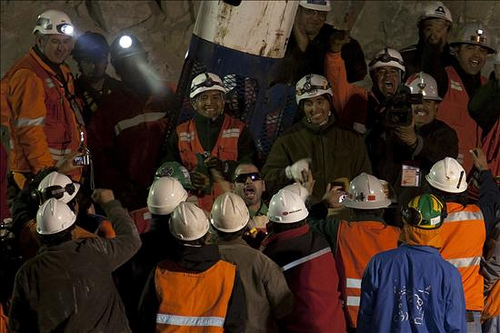
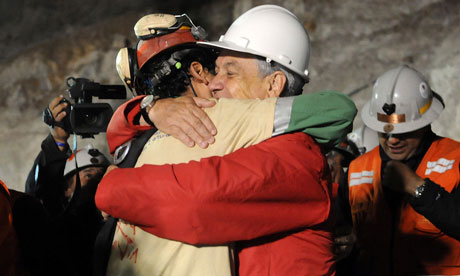
this gives me a nice lead-in to talk about the copiapo chile mine rescue, which i have been talking about honestly since it happened.

watch THIS: it makes you appreciate the rescue even more!

http://www.youtube.com/watch?v=fdZtDucLpTw&feature=channel

me and the other 1 billion (WOW) people who watched the rescue live were amazed, shocked, and touched. god bless modern technology, airplanes, camera crews, and the sleepy jet-lagged reporters who brought us that story. my eyes watered up with tears as the first miner, Florencio Ávalos, was pulled up out of the half mile of stone in that tiny little space capsule. he received a hug from his son and wife, and then was whisked off to the hospital. can you IMAGINE being one of the journalists covering that story?? i was sitting on my couch in provo getting teary eyed and i have never been to chile or even ever met anyone from chile. ridiculous. anyways, i am SO overjoyed they are all out and it really is a miracle.


the reason the rescue was brought up was because brother campbell asked don about the crandall mine disaster that he covered a few years back, which will nicely illustrate what exactly i got out of our discussion on the mind of a journalist.

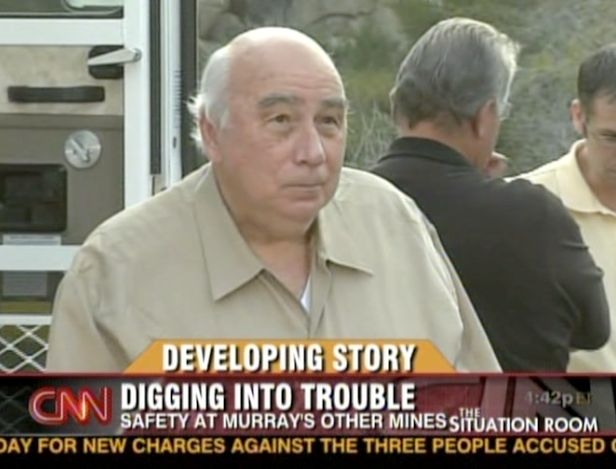
A mining accident took place on Monday, August 6, 2007, at 2:48 a.m. at the crandall canyon mine in utah. the collapse was tragic because 6 workers and 2 rescuers died. the whole thing, of course, was a hay day for the media, including don. he told us a story about the owner of the mine, bob murray.


we watched a clip from a press conference that showed bob murray getting angry at the media for (correctly) accusing him and his business partners for being largely responsible for the mine collapse because of the type of mining they were doing and the condition of the mine. don said it was so interesting to be there and to hear the questions being asked and the answers given. the journalists involved really had an opportunity to dig deep and become investigative journalists, who, in my opinion, were responsible for the fact that bob murray fled town and declared the mountain 'evil'. i think he is evil....but whatever....

don was the epitome of someone who has the mind of a journalist and is always ready to go further than just meeting a deadline. that is what should be filling the mind of a journalist. how can they get MORE INFORMATION. how can they GET THE TRUTH RIGHT. how can they GET MORE DETAILS. how can they MAKE SOMETHING RIGHT. and the list goes on...and one....and on...and on.

it really is amazing to me how lucky we are at this school to get such great advice and such a great education on how we can accomplish this. we talk about it basically all day throughout my various broadacst journalism classes. we have been taught that we need to get our facts straight, bring the public the news that THEY need to hear, and make sure that we do it in the right way. we are not focused on who we work for, the money we make, or WIIFM. (the acronym brother johnson loves, 'what's in it for me?'. I realize this isn't the really journalism world, i mean, we aren't working for anyone or trying to make money, but what we are being taught about right now and about the mind of a journalist is so helpful for our futures.


for now, my mind of a journalist might be boggling around facts i need to remember for my comms 239 class, but overall, i hope that it it one day filled with memories and stories like don has, full of a life of hard work and story chasing to get the publics the information they need to be free and self-governing.

Wednesday, October 13, 2010

loyalty schmoyalty.

"if it comes down to a question of loyalty, my loyalty will be to the person who turns on the television set..."
-nick clooney

two weeks ago one of the groups presented in our Comms239 class, and it was one of the most enjoyable presentations yet. (no, i am not just saying that because they are the ones grading these blog posts....). seriously, i really found the topic interesting. the topic they were assigned to was that of loyalty and journalism.

i began this blog post off with the quote about former journalist nick clooney's views on who he is loyal to because i believe that they closely parallel mine. when asked who a journalist is loyal to, some pessimist's may say:
-those who pay the bills by advertising in the paper or during commercial breaks, ect.
-those who have money and can give it to me if i do what they want, whether it be ethical or not.
-those who i know and somehow have a connection and lifelong loyalty to because we are friends.
maybe it's the fact that i am an optimist...or maybe it is the fact that i am only a reporter for kbyu news at BYU and therefore cannot be considered a REAL journalist in the eyes of the world because i am in college and do not get paid....but either way....i agree with nick. our loyalty is to the viewer! the viewer is why we have chosen the career as a journalist. the viewer is the one we are being a watchdog for . the viewer is the one who needs to know important information that only we can provide them with. the viewer is who we are loyal to. the end.
(***note: you can substitute the word viewer for reader, citizen, ect......**)


but not really the end. i now will back up why it is important to be true to the viewer. because citizens are NOT customers, we can consider the news a free public good/service that is issued to the viewers. the citizens who read our paper or watch our news shows may have to pay to get the paper or pay to get a channel, but they never have to pay for INFORMATION or unbiased opinions. those come with the paper and news shows.

one of the things discussed during class was how we can remain loyal to our viewers/readers and keep them happy. the group that presented gave us a list which i thought was really great:

1. the owner must be committed to the citizen first.
2. hire business managers who also put citizens first.
3. set and communicate clear standards with the company.
4. journalists have the final say over the news.
5. communicated clear standards to the public.

so many times, journalists forget to seek out the public's best interest and focus more on the big businesses that finance their station. in a perfect world, every news station and paper would follow these rules and the consumer would always have perfect information readily available. this is not always the case, however, i believe that we are really lucky to be living in america where we can say that, for the most part, we have incredibly balanced news stations and papers that put the consumer and citizen first. this is woven into the fabric of our society and democracy the founding fathers worked so hard for us to have! the first amendment clearly states that it is the RIGHT of the public to have equal and fair information. if you did not know that....then read this. it is awesome. and it is a link.

two summers ago i worked at Fox5 in las vegas. as we were discussing on how to put the consumer/viewer (in our case) first in class, i realized that Fox5 had something that they did that is a great example of this. it is called: THE RANT. basically, the rant is a little 5 minute blurb on the ten o'clock news hosted by one of the anchors, john huck, and has increased Fox5's viewership and ratings tremendously. what exactly is it?? it is a chance for viewers to voice their opinions on issues in las vegas. the station takes a topic that is current, for example, a politician who has done something to offend many citizens, and they let folks call in and leave voice mails ranting about it. or some people email their opinions and anger messages. it is both highly entertaining and very effective for creating positive change! the ranters watch to see if they made it on. the politician watches to see what he can do to get lost votes back. and the average joe schmoe at home watches just because it is funny to hear crazy over-opinionated people rant about their feelings.


the reason i believe this is the best 5 minutes of all the Fox5 news programs is because it involves the viewer. it puts the viewer first. before the writers, producers, reporters, news managers, station owners, and everyone else. they get to write the news, and it makes them feel POWERFUL! i love it! everyday i would go into work i would love hearing about the rant and reading some responses. for more information about the rant and to read some of the responses, click on this LINK:

this is a common practice on many news stations, nowadays. with twitter and texting so common, many news stations run a story and then ask the viewers to tweet/call/text/email in their opinions...some of which are read live on the air. this is a great way of making sure loyalties stay on the viewer.

when i go out and get a news assignment from my news director, and start working on my story for my news reporting day....the only thing i can think about when i am out there in the field (besides making sure i get enough footage and good interviews), is what my viewers are going to think of it. i happen to have a lot of family in utah who watch my show, as well as a sweet mom and dad who watch my show on youtube after it airs. although i have personal connections to these people, this example illustrates the kind of opinion every journalist should have. what are the viewers going to think of a story? if my story is unbalanced or unfair, i know MY viewers would let me know and rebuke me for it. i always keep that in the back of my mind, as i hope all other journalists do.

although some people may forget where our loyalties lie, i hope that i never do. i apologize that the bulk of this blog post has been focused on that subject, but it is very important to me, and i feel like it is the most important way we can keep our freedom of the press alive and well in this great country.