Thursday, December 2, 2010

Journalism and the Responsibility to Conscience

For the last class, the group gave a great and well-thought-out presentation in regards to journalism and the responsibility to conscience. We also had a reading assignment out of The Elements of Journalism, which is where I want to focus this blog post.

Chapter ten of Elements talks about the October 2002 snıper shootıngs and the work of a young reporter for the New York Tımes named Jayson Blaır. Blaır was a promısıng young reporter...but was caught up ın a web of lies and contradictions. Blair was offered an extensive internship and was believed to have graduated college. this was not, however, the case. He was lying to get the job.

Blair began to write good stories, especially for the sniper case. however, these stories were fabricated and copied. He was using sources that were made up. Blair was eventually caught, and resigned from his position....disgraces and without a job. He is not a "life coach," and his given numerous talks and forums on his lessons learned from what happened. I watched one of these forums and was very interested in what he had to say. He says it is an "old wound" for both him and the journalism world. He believes that we need to do all we can do restore power and peace to the world of journalism. He seems to want to truly aid journalism students and guide them to help them avoid his same mistakes. Here is the video I watched: follow this LINK:

youtube.com/watch?v=kFePfsBlocA&feature=related

Here are just a few of the problems Blair had with his career in journalism, all found on this LINK:
wikipedia.org/wiki/jaysonblair

he made up a story about a shooting suspect getting ready to confess to police that everyone knew was untrue.
he made up a source when reporting on the sniper shootings.
he claimed to be in washington when he was not.
The story of Blair was, for me, an inspiration to be a better journalism. We each have a conscious and we know what is right and wrong. The book talks a lot about honest and using personal judgement, and I agree with everything that they say. We know how to be good journalists, and have the obligation to the public to fulfill that duty. For me, when I am writing my news stories for KBYU and for our news show, it is so easy to just copy and paste facts, change names of friends and make a story up, or use a bit of information that i didn't get permission to use. It is easy, and it is done all too often.

I have a personal story I would like to conclude this post with. A few weeks ago I was filming a story for KBYU on a cancer 5k race for a man fighting cancer. I found out after I got home that my microphone didn't work, and my interview with a runner who had just finished the race didn't work. I was devastated. I could not recreate the event, and knew that my news director would be angry if I didn't have that interview. I talked to my sister about it. She decided that she would have her roommate dress up like a runner and go stand over on the coarse and we would film the interview again. I was so happy! My problems were solved. However, a few minutes before we began the interview, we all started feeling bad. We knew we were lying, and felt horrible. We decided that we wouldn't not go through with the interview. My news director was not angry, and I felt honest. My conscience saved me.

I am grateful that I have the conscience needed to be a good journalist and not rely on lies and deception to be successful.

Friday, November 12, 2010

Mormon Media Symposium


Today I had the great opportunity to attend the Mormon Media Studies Symposium, a festival of speakers and presentations on Mormon media and a history of the media as it relates to our faith. I chose to attend two presentations, one was called: "Out of Obscurity, Heber J. Grant's Communications and Public Relations Efforts to Bring the Church into a National Positivie View," given by BYU Department of Communications Professor Edward E. Adams. This presentation was really interesting. He spoke a lot about how the church was so negatively portrayed in magazine and newspaper articles, as well as in movies during the early 1920's. People loved to write about the "crazy Mormon polygamists" that were out to corrupt society and steal your children and sell them off into the Mormon polygamist trade. That simply was not true, and President Grant realized that he had the duty to turn that image around by using public relations and the media. Professor Adams talked about how a few celebrities of the time who were LDS, as well as things happening in Utah that caused the attention of the nation to turn to them. I believe that President Grant had the divine responsibility to make the church seem more "normal" and "welcoming," and I think he did a great job of it.
The other presentation I attended was given by BYU church history professors, Susan Easton Black, and it was about the St. Louis Luminary, a paper published for the saints living in the Midwest during the latter half of the 18th century. President Brigham Young sent people over for the sole purpose of starting the St. Louis Luminator. The paper helped the thousands of saints that were on the way over to Utah and ended up settling in St. Louis for various reasons stay connected. This paper was one of the first successful papers that the church had that reached millions of people. Sister Black told us that jokes, recipes, marriage announcements, and other church news were included in the paper. The paper was so informational and important, that Sister Black took it upon herself to digitize it so that everyone has access to it. She said she was tired of squinting through a magnifying glass to read the paper. What a great service Sister Black did for everyone who is interested in seeing what the St. Louis Luminator has to offer.
I am really happy I was able to attend the Mormon Media Studies Symposium. It was a lot more entertaining that I was expecting, and I learned a lot about the media in this church and how it has helped shape us into the powerful world religion that we are today.

Wednesday, November 10, 2010

watchdoggie

lois lane is one of my heroes. maybe it's the hopeless romantic in me coming out. the one who wants to be swept off my feet or rescued from falling off a tall building by superman. that could be one of the reasons why i love her...but i think the main reason is that she is one incredible journalist. i love this quote from lois lane:


lois lane is a great example of my blog topic today: WATHCDOG JOURNALISM. she is a great investigative journalist. watch this clip:


watchdog journalism is one of my favorite topics to discuss. the idea of journalists being a protector of the human race and an investigative force for the common man makes me SO excited.
we, as journalists, have so many duties and responsibilities. this class has really opened up my eyes to that. we have to:
-decide what the public needs to know
-report accurate information
-decide what portions of interviews or what footage we will use
-keep our opinions on the down low
-be investigative journalists....

i think that the duty we have to be investigative journalists truly is a duty and a privilege. it may not always be the glamorous detective work like we see in the movies, but by asking the right questions and choosing the right stories we have the potential to solve a lot of problems.

i have loved investigative journalism since i was a child because it was huge part of one of the major stations in las vegas, where i am from. they had an "i-team," a team of reporters that did stories only on investigative topics. this news station had a huge hand in many major changes that happened in las vegas in regards to unsanitary restaurants, faulty schools, government spending scandals, and many other topics. i was so fascinated every time i would watch one of these stories.

one of their main reporters is named george knapp. george knapp is one of the coolest people ever. his stories are so intense. he always knows the right questions to ask, the right documents to look at, the right places to go for a story. he always gets the answers he is seeking. here is an example of one of his stories:


i love his usage of government documents, interviewing, and investigative journalism to get answers to his questions. as a broadcast journalism major here at BYU, i want to be like george knapp and do good for the general community.

another topic that the group discussed during their presentation last week was the subject of journalism as an independent monitor of power. i love their quote that they used for their handout:

"the press was protected s that it could bare the secrets of government and inform the people. Only a free and unrestrained press can effectively expose deception in government." -pg. 142 supreme court justice hugo black

in my opinion, this statement perfectly summarizes what it means to be an independent monitor of power. we have to comfort the afflicted, afflict the comfortable, and all things in between. in order to properly do this....we need to be free and unrestrained. in this modern world of money and self-interest, this can be hard. but we can do it. i know we can! we can keep journalism as the founders of the constitution originally intended it to be: a ways of keeping this country free and self-governing and helping people out. we have such a great gift in this nation to be free and have free presses. this is a great article that summarizes what i am talking about:

http://caselaw.lp.findlaw.com/data/constitution/amendment01/06.html#1

one of my dreams in life is to be a reporter who gets put on an assignment involving investigative journalism. that is a major reason why i wanted to go into broadcast journalism in the first place. i believe in the power of the press to help people and to influence a community for good.

woof woof.

Thursday, October 28, 2010

verify verify verify!!!!

when i first saw the topic that we would be discussing last week in our class/blogging about for this week.....i got really excited. VERIFICATION AND JOURNALISM. verification...what a great word. i just love it. as group 6 so kindly outlined for us, verification is:

-the establishment of the truth of correctness of something by investigation or evidence.
-the evidence that proves something is true or correct.
-evidence or testimony that confirms something

verification is, basically, necessary in journalism for us to maintain credibility, independence, and fairness. verification does NOT necessarily mean fairness and objectiveness, but the subjects have to do with one another. i like to think of it as verifying we get our facts straight and correct....which has will determine whether we are fair and balanced, but the two certainly are not synonymous.

verification is SO important to me. i never really understood how important it was until i began this semester working for the KBYU daily news at noon program that all broadcast journalism majors have to work for. my comms 325 class, beginning reporting, is a class where we are assigned a beat, given an assignment to do a story each week, and the rest is up to us. we find our stories ourselves, shoot our stories ourselves, set up interviews ourselves, interview people ourselves, get footage ourselves, wrote our script ourselves, edit our stories ourselves, produce the stories ourselves....

you get the idea....

that was a long tangent and an indirect way of me saying we have A LOT to think about when we are doing a news story. a lot. my brain almost explodes into a million little pieces each and every week of my life. i'm not complaining, i just found this past week's subject matter interesting BECAUSE of the fact that this semester, as a somewhat real-life journalist, i have found out that verification is truly so important. i have to check my facts...then check my facts...then check that i actually checked all my facts correctly. i also have to check:
-quotes
-numbers
-addresses
-statistics i use
-all my footage to make sure i am not showing anything i am not supposed to be showing
-my attributions to people i talk about
-time references used
-web-sites
-spelling
-ages
-addresses
-official titles
-and MORE.

if i, or any other journalist, fails to properly do this, we we are putting ourselves at risk for much more than a stern-talking-to from our news directors. this is a great LINK to an article about the AP and their fact checking problem, it's really interesting, i enjoyed reading it:
http://bigpeace.com/fgaffney/2010/08/19/a-p-gets-its-facts-wrong/

here are some more interesting sites about fact checking:
http://www.journaliststoolbox.org/archive/2010/09/urban-legendsfact-checking.html


this is my favorite example: i remember my freshman year after the april conference BYU's daily universe came out with the conference report but accidentally wrote "the 12 apostates" instead of "the 12 apostles." whooops. here is the link about that:
http://newsnet.byu.edu/story.cfm/72090


i learned in one of my broadcast classes that the quickest way to get someone mad at you is to spell their name wrong. this might seem like something so little and menial...but it really is something that we need to be checking on. i have also learned about the importance of being sure you know what you are talking about from my media law and ethics class. we have learned a lot about LIBEL. being charged with libel means you wrote something that defames someone because it is untrue and harmful. this can be a mistake, sometimes, and it results from verification fail.

i don't want to focus TOO much on verification. although it was the most interesting part of the presentation and reading for me, we also talked a lot about staying objective. the group outlined a few simple ways to help us stay objective:

1. Never add anything that was not there.
2. Never deceive the audience
3. Be as transparent as possible about your methods and motives
4. Rely on your own original reporting
5. Exercise humility

basically...it's just really important for us to keep in mind that we can't get TOO creative with our report. we need to stick to the facts, remain unattached to the subject matter, and focus on TRUTH, the theme and anthem for journalists. i really like the last point that the group put on the list, about being humble. that's a big thing. we can't get a huge head and decide that we are so good and so talented. that is when problems occur. i will try to remain and humble as possible when it comes to reporting and journalism.

someone who i think does a great job at following all these rules i have outlines in this blog post is ANDERSON COOPER. he is one of my favorite t.v. reporters and i love his show. he is so great.
this LINK i have attached in this post is of anderson following up after an interview he did with texas house state member debbie riddle, who is, in my opinion, crazy. she came on his show to discuss her wacko theory about "terror babies," meaning babies that are born to middle eastern women here on a vacation so that they can have automatic citizenship, then taken back to the middle east and raised as terrorists only to return to the USA 20 or so years later to bomb us all into oblivion. anderson cooper thought this could be happening, but had seen no proof of it and had been told by FBI officials that it was completely false. he invited ms. riddle to go on his show and clarify. she did nothing of the sort. she beat around the bush and was stand-offish. she later made a big fuss about how anderson was unfair to her and set her up. and this is why i LOVE anderson cooper. he took 11 minutes out of his show to defend himself, shut down ms. riddle, clear the facts, and tell us that we need to not let public officials get away with this kind of crap. it was great. he is the king of verification. he demanded facts and correctness and she could not deliver. his segment was called "keeping them honest," which is the exact thing journalism and verification are about. HONESTY. watch the clip...it's great.


in conclusion, i will try my best to verify facts in a story and to stay accurate. it's really important because without doing that...you have no credibility...and without credibility...you will not be a very trusted journalist.

Thursday, October 21, 2010

the mind of a journalist

last week for our comms 239 class we had a guest speaker named don meyers come talk to us. don writes for the salt lake tribune, http://www.sltrib.com/, and came to tell us a little bit more about his experiences as a journalist.

at first when i heard we had a guest speaker i was honestly prepared to take a nap. (don't judge me, having a class from 4:30-7:00 makes me tired just typing that), anyways, i was going to tune him out and enjoy my sleep. however, i was awake and into the talk the whole time. i really enjoyed it and learned A LOT.

he was a funny little man, with interesting expressions and mannerisms. he told us stories about his stories he has covered and his experiences in the professional journalism world. for me, my favorite part was when he dove into a story about the crandall mine collapse.

this gives me a nice lead-in to talk about the copiapo chile mine rescue, which i have been talking about honestly since it happened.

watch THIS: it makes you appreciate the rescue even more!

http://www.youtube.com/watch?v=fdZtDucLpTw&feature=channel

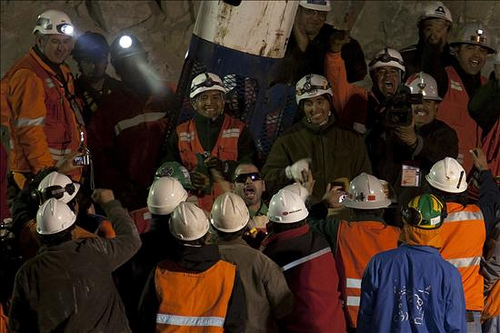
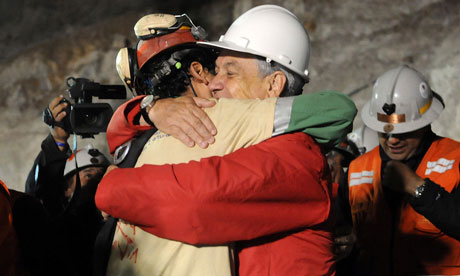
me and the other 1 billion (WOW) people who watched the rescue live were amazed, shocked, and touched. god bless modern technology, airplanes, camera crews, and the sleepy jet-lagged reporters who brought us that story. my eyes watered up with tears as the first miner, Florencio Ávalos, was pulled up out of the half mile of stone in that tiny little space capsule. he received a hug from his son and wife, and then was whisked off to the hospital. can you IMAGINE being one of the journalists covering that story?? i was sitting on my couch in provo getting teary eyed and i have never been to chile or even ever met anyone from chile. ridiculous. anyways, i am SO overjoyed they are all out and it really is a miracle.


the reason the rescue was brought up was because brother campbell asked don about the crandall mine disaster that he covered a few years back, which will nicely illustrate what exactly i got out of our discussion on the mind of a journalist.

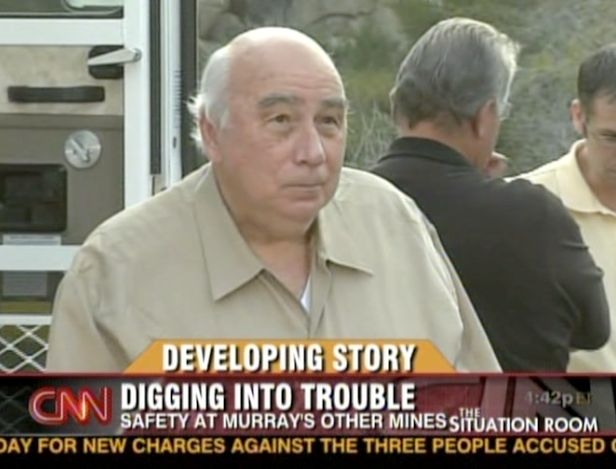
A mining accident took place on Monday, August 6, 2007, at 2:48 a.m. at the crandall canyon mine in utah. the collapse was tragic because 6 workers and 2 rescuers died. the whole thing, of course, was a hay day for the media, including don. he told us a story about the owner of the mine, bob murray.


we watched a clip from a press conference that showed bob murray getting angry at the media for (correctly) accusing him and his business partners for being largely responsible for the mine collapse because of the type of mining they were doing and the condition of the mine. don said it was so interesting to be there and to hear the questions being asked and the answers given. the journalists involved really had an opportunity to dig deep and become investigative journalists, who, in my opinion, were responsible for the fact that bob murray fled town and declared the mountain 'evil'. i think he is evil....but whatever....

don was the epitome of someone who has the mind of a journalist and is always ready to go further than just meeting a deadline. that is what should be filling the mind of a journalist. how can they get MORE INFORMATION. how can they GET THE TRUTH RIGHT. how can they GET MORE DETAILS. how can they MAKE SOMETHING RIGHT. and the list goes on...and one....and on...and on.

it really is amazing to me how lucky we are at this school to get such great advice and such a great education on how we can accomplish this. we talk about it basically all day throughout my various broadacst journalism classes. we have been taught that we need to get our facts straight, bring the public the news that THEY need to hear, and make sure that we do it in the right way. we are not focused on who we work for, the money we make, or WIIFM. (the acronym brother johnson loves, 'what's in it for me?'. I realize this isn't the really journalism world, i mean, we aren't working for anyone or trying to make money, but what we are being taught about right now and about the mind of a journalist is so helpful for our futures.


for now, my mind of a journalist might be boggling around facts i need to remember for my comms 239 class, but overall, i hope that it it one day filled with memories and stories like don has, full of a life of hard work and story chasing to get the publics the information they need to be free and self-governing.

Wednesday, October 13, 2010

loyalty schmoyalty.

"if it comes down to a question of loyalty, my loyalty will be to the person who turns on the television set..."
-nick clooney

two weeks ago one of the groups presented in our Comms239 class, and it was one of the most enjoyable presentations yet. (no, i am not just saying that because they are the ones grading these blog posts....). seriously, i really found the topic interesting. the topic they were assigned to was that of loyalty and journalism.

i began this blog post off with the quote about former journalist nick clooney's views on who he is loyal to because i believe that they closely parallel mine. when asked who a journalist is loyal to, some pessimist's may say:
-those who pay the bills by advertising in the paper or during commercial breaks, ect.
-those who have money and can give it to me if i do what they want, whether it be ethical or not.
-those who i know and somehow have a connection and lifelong loyalty to because we are friends.
maybe it's the fact that i am an optimist...or maybe it is the fact that i am only a reporter for kbyu news at BYU and therefore cannot be considered a REAL journalist in the eyes of the world because i am in college and do not get paid....but either way....i agree with nick. our loyalty is to the viewer! the viewer is why we have chosen the career as a journalist. the viewer is the one we are being a watchdog for . the viewer is the one who needs to know important information that only we can provide them with. the viewer is who we are loyal to. the end.
(***note: you can substitute the word viewer for reader, citizen, ect......**)


but not really the end. i now will back up why it is important to be true to the viewer. because citizens are NOT customers, we can consider the news a free public good/service that is issued to the viewers. the citizens who read our paper or watch our news shows may have to pay to get the paper or pay to get a channel, but they never have to pay for INFORMATION or unbiased opinions. those come with the paper and news shows.

one of the things discussed during class was how we can remain loyal to our viewers/readers and keep them happy. the group that presented gave us a list which i thought was really great:

1. the owner must be committed to the citizen first.
2. hire business managers who also put citizens first.
3. set and communicate clear standards with the company.
4. journalists have the final say over the news.
5. communicated clear standards to the public.

so many times, journalists forget to seek out the public's best interest and focus more on the big businesses that finance their station. in a perfect world, every news station and paper would follow these rules and the consumer would always have perfect information readily available. this is not always the case, however, i believe that we are really lucky to be living in america where we can say that, for the most part, we have incredibly balanced news stations and papers that put the consumer and citizen first. this is woven into the fabric of our society and democracy the founding fathers worked so hard for us to have! the first amendment clearly states that it is the RIGHT of the public to have equal and fair information. if you did not know that....then read this. it is awesome. and it is a link.

two summers ago i worked at Fox5 in las vegas. as we were discussing on how to put the consumer/viewer (in our case) first in class, i realized that Fox5 had something that they did that is a great example of this. it is called: THE RANT. basically, the rant is a little 5 minute blurb on the ten o'clock news hosted by one of the anchors, john huck, and has increased Fox5's viewership and ratings tremendously. what exactly is it?? it is a chance for viewers to voice their opinions on issues in las vegas. the station takes a topic that is current, for example, a politician who has done something to offend many citizens, and they let folks call in and leave voice mails ranting about it. or some people email their opinions and anger messages. it is both highly entertaining and very effective for creating positive change! the ranters watch to see if they made it on. the politician watches to see what he can do to get lost votes back. and the average joe schmoe at home watches just because it is funny to hear crazy over-opinionated people rant about their feelings.


the reason i believe this is the best 5 minutes of all the Fox5 news programs is because it involves the viewer. it puts the viewer first. before the writers, producers, reporters, news managers, station owners, and everyone else. they get to write the news, and it makes them feel POWERFUL! i love it! everyday i would go into work i would love hearing about the rant and reading some responses. for more information about the rant and to read some of the responses, click on this LINK:

this is a common practice on many news stations, nowadays. with twitter and texting so common, many news stations run a story and then ask the viewers to tweet/call/text/email in their opinions...some of which are read live on the air. this is a great way of making sure loyalties stay on the viewer.

when i go out and get a news assignment from my news director, and start working on my story for my news reporting day....the only thing i can think about when i am out there in the field (besides making sure i get enough footage and good interviews), is what my viewers are going to think of it. i happen to have a lot of family in utah who watch my show, as well as a sweet mom and dad who watch my show on youtube after it airs. although i have personal connections to these people, this example illustrates the kind of opinion every journalist should have. what are the viewers going to think of a story? if my story is unbalanced or unfair, i know MY viewers would let me know and rebuke me for it. i always keep that in the back of my mind, as i hope all other journalists do.

although some people may forget where our loyalties lie, i hope that i never do. i apologize that the bulk of this blog post has been focused on that subject, but it is very important to me, and i feel like it is the most important way we can keep our freedom of the press alive and well in this great country.


Wednesday, September 29, 2010

truth and JOURNALISM!!!

in the student presentation last week in Comms 239, we talked a lot about presses and democracy, and the USA's versions and methods of journalism compared to other nations versions and methods. it was very interesting. it also made me thing. a lot......

we are really lucky. we have the most open, free, fair, and balanced press system in the world! we have a government that allows and insists that the press be a gatekeeper, watchdog, and information system for a free democracy to rely on. i found it really interesting what other kinds of press systems different nations have, so i am going to include some information about them on this lovely blog:

1) LIBERAL MODEL:


this model is most common in america, canada, australia, new zealand, and other democratic and free nations. it focuses on the production of mass media for the purpose of informing the public. it encourages the media as a watchdog. it encourages a high level of professionality from ournalists, meaning, they need to be balanced, truthful, and fair. this is what makes america so great. our journalists are truthful. sure, we have networks like FOX and NBC that are openly either liberal or conservative, but that is what makes us a liberal society. we have stations that are OPENLY either right or left. we know what we are getting! the governemtn does not use the media as a toold to get the people to think how they want them to think or vote how they want them to vote. the government needs the media to get information out, not the other way around!!!

2) POLARIZED PLURALIST MODEL:
this model is common in southern european countries. the polarized pluralist model took me a while to understand, mainly because it is not that different from the liberal model. the main difference in the two is that the polarized pluralist model has more government intervention when it comes to content of the media. the published media is meant for the upper class and educated readers. the government uses the media as a tool and publishes through them. the newspapers, magazine, and televised news shows are highly politically controlled.

3) DEMOCRATIC CORPORATIST MODEL:


the democratic corporatist model is the most interesting, in my opinion. it is found most commonly in northern european countries such as norway, denmark, and switzerland. the democratic corporatist model means that nations publishes lots of widespread media to their citizens that are highly politically swayed. the media has no shame when it comes to publishing things that favor a certain political party or group. i found this section of the presentation very interesting, mainly because i went on a study abroad to london from january-april of this year. during one of those weeks, 4 friends and i went to copenhagen, denmark. while i was there, i picked up some literature from the train station. i got some newspapers and magazines to read during a long train ride to one of the many danish castles we were visiting. i had my translation book with me, and, to entertain myself, i began translating. even before i knew a single thing about any of these journalistic models we have read so much about in this class, i noticed that their published materials were very political. and, just as we read about in class, the journalists themselves did NOT have to be fair at all. they were not the watchdogs or gatekeepers. they were political players and campaign advocates for a certain candidates or subject. it was so strange for me to read that, and made a huge impression on me. i brought those magazine and newspapers home with me and still have them. my own little piece of the democratic corporatist model. here are so shots of us in copenhagen denamrk. never ever have i been so FREEZING. never ever visit denmark in mid-february. brrrrr.

the famous "little mermaid" statue.


the copenhagen temple.

so that is a very BASIC overview of the three models of journalism.


the other subject we discussed and read about for last week's class was that or TRUTH and what exactly that means. in our book: ELEMENTS OF JOURNALISM by bill kovach and tom rosenstiel, TRUTH is defined as the "first and most confusing principle" of journalism.

in the book, they state:
"truth, it seems, is too complicated for us to pursue...."
why is it so complicated? because truth can change. truth can be debated. what is true for me might not be true for YOU.

example: i know the church is true. most of us in this class know the gospel to be TRUE. but what about the other people randomly walking around on the street with us mormons? if we asked them if the church is true, would they agree? most likely not at all. we might be able to convince them, but they would not think the church is true. does that make it any less true for us?? no. this is why it is also tricky for journalists to define exactly what TRUTH is.

tom brokaw, one of my favorite reporters from NBC said:
"journalism is a reflection of the passions of the day. News is whatever is 'most newsworthy on a given day.'"
so true! what is true today may be false tomorrow. that is the beauty of news. it is ever changing. in this blog post, i would rather not debate about what is true and what is not true, but rather just state as a matter of fact that i don't believe we will ever know exactly what is true and what is false. the most important thing for me to do, as a journalist, is to get the facts straight and accurate. these two goals put together are the closest we can get to truth. if we report what we know in a professional and factual way then that is all that we can do, and that, in essence, is truth.

i remember as a little kid i used to sing this song in primary. i think it's an appropriate song that we as journalists can sing. it speaks of truth and being fair and honest. and it does so in a catchy, fun, cute, and retro-throwback way. enjoy. and remember: NEVER TELL A LIE.....


Wednesday, September 22, 2010

social media and the future of journalism.

social media.


now this is something i can talk about for days on end.

i LOVE social media. and i am way good at it. is it possible to have social media be one of those talents discussed in the doctrine & covenants?? cause...pretty sure i have been blessed with the divine gift of face-stalking.

there is so much i can say about social media. i could talk about how:

-social media is the number one way people connect with each other. forget actually talking in person. old school.......
-ashton kutcher has more followers on twitter than there are people in switzerland.
-If Facebook were a country it would be the world’s 4th largest between the United States and Indonesia (note that Facebook is now creeping up – recently announced 300 million users)
-If you were paid a $1 for every time an article was posted on Wikipedia you would earn $156.23 per hour
-There are over 200,000,000 Blogs
-What happens in Vegas stays on YouTube, Flickr, Twitter, Facebook…

these are just some fun facts. there are many more out there that are simply MOND BLOWING. check out:
http://socialnomics.net/2009/08/11/statistics-show-social-media-is-bigger-than-you-think/

do it now.

social media is HUUUUUUMONGOUS. seriously people, think about it. 5 years ago, no one had a facebook relationship for everyone to gossip over. people found out their roommates were engaged because they told them, not because they accidentally saw it on facebook before she had time to call her roommate back. (no........i'm not bitter........). people had no idea what joe jonas was eating for breakfast each morning because no one followed him and twitter because he had no twitter account and neither did anyone else. no one uploaded hilarious videos onto youtube so their grandma across the country could see it. no one cared about sharing pictures on photobucket or flickr, they just developed them down at the costco and mailed out copies to friends and families.

TIMES HAVE CHANGED. i am the biggest guru for social media. yes, it is a colossal waste of my time and every bad grade i have ever received has not been because i am dumb or not a good student, but rather because i was up late on facebook or twitter or youtube. it's so sad. this blog post was actually a healthy awakening for me, because i thought to myself as i started:

"social media is big....but i don't think it really influence me or changes my life THAT much. it's more of just something i do when i am bored."

after further contemplation and research, i decided that i am so into social media. i mean, seriously, look at this. IT IS PATHETIC: please take a gander at how pitiful my life is.

youtube:
Photobucket
twitter:
Photobucket
photobucket:
Photobucket
linkedin:
Photobucket
facebook:
Photobucket
blog:
Photobucket


bah hahah. embarrassing??? kind of. but maybe i shouldn't be embarrassed that i have an account, profile picture, short description of myself, and at least 2 followers on practically every social media outlet invented.

maybe it's a good thing!!!

this is a nice segway into the purpose of this blog post: SOCIAL MEDIA AND JOURNALISM.

in my broadcast journalism class, we are required to do a web version of out news stories each week. we do this because most people don't get the news now at 5 o'clock on their couches while having a nice chat with their wife and kids. they get their news on their iphones. they get it on their emails. they get it whenever they are on their computers during a lunch break at work. if we did not evolve with the news/website relationship then we would all soon be out of business.

i put all my news stories on youtube because if i have a prayer of getting hired at a news station after graduation then i want potential employers to be able to readily access my stories on youtube. i have a blog where i post my thoughts and feelings and pictures for anyone who wants to get to know me or know anything about my life can read about it. i would be perfectly happy for future employers to check out my blog. in fact, i recently ordered MOO cards. ever heard of them?? they are trendy little business cards you can hand out. on the website where you design your own MOO cards, they encourage us to put our blogs on there......cool huh?? that is the kind of world we are living in. the social media we choose to be involved in is now intertwined into WHO we are. i am whatever is on my blog, or whatever is on my facebook, or whatever is said on my twitter.

this past summer, i worked at the american red cross for their PR department. i was in charge of social media. i worked tirelessly on their twitter account and facebook page, because i realized that it could make a world of difference for us. i started following a bunch of other red cross chapters and local news reporters and columnist in las vegas (where i was working), and pretty soon we had hundreds of followers. we also got lots of facebook requests once we started publicizing our page. we put our news releases, press releases, event information, and helpful facts about water safety or fire safety on our pages. this was a great example to me about how the future of journalism relies on social media. we had SO MUCH more interest in what we were doing once we used social media. we received more donations and got more volunteers. the old ladies who i worked with who had never heard of facebook were blown away.

i believe that social media is the world's most fun method of advertising and contacting people. journalims and social media is a beautful combination. now more people can voice opinions about news stories or debated topics. there is a never-eding amount of space to publish whatever we want. we are not restricted to a 30 minute newscast or a 30 page news paper. if i wanted to, i could go and write a 593 page essay on any topic i want, publish it on my blog, and wait for the comments to come from weird people who actually had time to read it. that is the beauty of journalism and social media. i have said it once, and i will say it again: SOCIAL MEDIA IS MAKING EVERYONE IN THE WORLD A JOURNALIST.

i love it.

i am not embarassed i have about a trillion social media windows currently open on my computer. i am not embarassed that it took my twice as long as it should have to write this blog post because i kept getting distracted on facebook, or because i was busy uploading my news story for channel 11 news this week on youtube and emailing it to my parents. NO SHAME. that is the world we live in. they even made a movie about it, and i am going to watch it. so there.


so, face-stalkers, blog-stalkers, and fellow tweeters. welcome to the new world. and mom, if you are reading this, get a facebook. it's only a matter of time.

watch this video for a jaw-dropping experience regarding social media: